
Protective packaging demand keeps accelerating alongside e-commerce growth and the expansion of electronics logistics. Bubble film remains widely used because of its lightweight structure and reliable cushioning performance, yet manufacturers running aging equipment often see their margins erode under intense market pressure. A bubble film extrusion machine with Smart PLC control can help close this gap by combining automated process control with the production speed and material flexibility required for modern packaging operations.
The Hidden Cost of Aging Extrusion Hardware
Older bubble film lines carry three compounding disadvantages. The first is energy inefficiency. Aging heating elements, conventional motors, and inadequate thermal insulation can increase electricity consumption and transfer more heat into the surrounding workspace. These legacy extruders may also struggle to process recycled resin consistently, which can increase reliance on virgin polymer and make recycled-content targets more difficult to achieve.
The second disadvantage is a heavy reliance on manual calibration. Thickness, line speed, and winding tension may be adjusted through separate controls with limited coordination between them. A minor adjustment error during roll changeover can lead to film breaks or uneven winding tension, increasing material waste and unplanned downtime.
The third disadvantage becomes more apparent as output speed increases. Unstable melt pressure and inconsistent temperature control can contribute to uneven bubble wall thickness and variations in puncture resistance. Bubbles may rupture during forming or show inconsistent air retention after production, reducing cushioning consistency and increasing the risk of quality-related rejection. Compounding these issues is a lack of centralized diagnostics. Troubleshooting a mechanical or electrical fault can become a prolonged trial-and-error process, extending downtime and putting shipping schedules under pressure.
Applications That Demand Consistent Cushioning
Precision optics and camera module packaging illustrate how demanding some protective applications can be. Surface scratches and vibration damage can be particularly costly, so cushioning film needs uniform bubble height and consistent rebound characteristics across the roll. Wall-thickness variation from an aging extrusion line can directly affect this consistency.
Battery component packaging presents a different challenge. These components can be relatively heavy while remaining sensitive to localized impact, creating demand for dependable puncture resistance and elastic recovery. Unstable melt pressure and inconsistent forming conditions can produce bubbles with varying strength, increasing the risk of damage during transit for high-value components.
Large appliance packaging places greater emphasis on throughput and production continuity. Seasonal demand spikes require sustained, high-volume output, while manual and disconnected tension controls can make older lines more vulnerable to film breaks. For operations running continuous shifts, maintaining stable winding conditions becomes particularly important when production interruptions can affect delivery schedules.
What Smart PLC Integration Actually Delivers
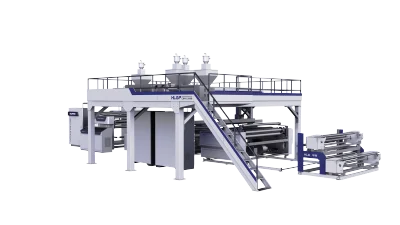
A Smart PLC framework replaces fragmented adjustment with centralized process control. Sensors continuously monitor key variables such as barrel temperature, melt pressure, motor speed, and winding tension. The PLC uses this data to coordinate heating, extrusion, and winding parameters when process conditions deviate from their setpoints. For manufacturers running continuous shifts, this reduces the need for repeated manual adjustments as production conditions change.
Precision engineering also extends into the mechanical core of the machine. A carefully profiled extrusion screw, combined with dedicated mixing and barrier sections along the barrel, promotes more consistent polymer melting and homogenization. This supports the processing of recycled resin blends while helping maintain stable film quality. Downstream, an optimized die distributes the melt evenly from center to edge through a coat-hanger flow channel. The forming station then shapes the bubbles with controlled dimensions and consistent wall thickness, helping maintain predictable cushioning performance across the finished film.
Tension management receives equally deliberate engineering attention. A servo-driven dual-shaft turret winder works with sensors that continuously track roll diameter, feeding this information back to the PLC so winding tension can be adjusted as the roll grows. When a roll reaches its programmed length, an automated cutting and roll-change mechanism transfers production to a standby core with minimal interruption. This helps reduce wrinkles, winding defects, and unnecessary production stops during continuous operation.
Configuration Flexibility Across Applications
No single bubble film structure is suitable for every application, which is why modern production lines can support different layer configurations for different performance requirements. From two-layer structures to more advanced multilayer configurations, manufacturers can adjust cushioning strength, clarity, material usage, and overall film performance according to the packaging application. A lighter structure may be suitable for precision optics, while a more robust configuration can provide additional protection for battery components or large industrial products.
Recipe storage within the PLC can further simplify production changes. Complete production profiles, including temperature settings, extrusion parameters, and tension settings, can be stored in the PLC for faster changeovers. Operators can recall established settings rather than repeatedly entering production parameters manually, helping improve repeatability when switching between film specifications.
Energy management follows the same integrated approach. Improved insulation around extrusion barrels helps reduce heat loss, while efficient motors and variable frequency drives can help control overall energy consumption. Networked PLC systems can also support remote diagnostics, allowing engineers to review operating data and fault records when troubleshooting is required. Earlier access to this information can help maintenance teams identify developing issues before they result in extended production interruptions.
Built for Continuous, Demanding Production
A well-engineered bubble film extrusion machine is only as reliable as the components supporting it through continuous operation. Robust framing helps suppress vibration at higher speeds, while protected electrical enclosures help maintain control stability in demanding factory environments. These structural details matter alongside the control system because consistent production over the long term depends on mechanical and electrical components designed for sustained industrial use.
We manufacture bubble film extrusion machines across multiple layer configurations, integrating Smart PLC control, precision extrusion and die technology, controlled bubble forming, and automated tension management into production lines for protective packaging. Whether the requirement is uniform cushioning for precision optics, dependable impact protection for battery components, or sustained output for large appliance packaging, our machines are engineered to provide the automation, process consistency, and production flexibility required by modern packaging operations.